

Hepatitis A Outbreak in Naples: Hospitals at Capacity, Raw Seafood Banned, Cases 41 Times Above Normal
A fast-moving hepatitis A epidemic has overwhelmed Naples’ main infectious disease hospital, spread to the island of Ischia, and triggered an emergency ban on raw shellfish across the city. With case numbers 41 times higher than the three-year average, health authorities are racing to identify the source, and urging the public to cook everything.
A hepatitis A outbreak of unusual scale and speed has hit the Campania region of southern Italy, centred on Naples, prompting the city’s mayor to issue an emergency ordinance banning the consumption of raw shellfish in all public establishments, filling the region’s main infectious disease hospital to capacity, and raising fears among public health authorities of a wider epidemic still in its early stages. Cases have been recorded not only across Naples and its province but also in other areas of Campania, including the island of Ischia, with the number of infections confirmed since January running at roughly 41 times the level recorded over the same period in the preceding three years.
The figures, released by the Prevention Department of ASL Napoli 1 Centro, tell a stark story. Since the beginning of 2026, 84 cases have been recorded in the Naples 1 territory alone, a tenfold increase compared to the average for the same period over the past decade and, when measured against the most recent three-year baseline, 41 times higher. Regional totals are climbing rapidly: from 133 confirmed cases the figure rose to 154 within 24 hours, with a further 22 under investigation. Fourteen new cases were recorded in the Naples ASL area in a single day; ten more were confirmed in Forio, on the island of Ischia.
By the numbers
154+ confirmed cases across Campania region as of 20 March 2026
84 cases in Naples ASL 1 territory alone since January — 10x the 10-year average
41x the case rate compared to the three-year average for the same period
50+ patients hospitalised at Naples’ Cotugno Hospital in just 15 days
14 new cases recorded in a single day in the Naples ASL area
10 additional cases confirmed in Forio, Ischia
The Cotugno Hospital: Beds Exhausted, Stretchers in the Corridors
The Ospedale Cotugno, Naples’ specialist infectious disease centre and the region’s primary point of reference for cases of this kind, has borne the brunt of the crisis. More than 50 patients were admitted to the hospital in the space of just 15 days. The eight observation beds in the first-line area of the infectious disease unit were all occupied. Stretchers were placed in corridors to accommodate patients waiting for beds. An alert was issued to the regional emergency coordination centre asking other hospitals to stop transferring additional patients to Cotugno, a communication that was initially summarised as ‘beds exhausted,’ though the hospital’s health management subsequently described the overall situation as ‘stable.’
Novella Carannante, deputy head of the emergency department, described the pressure on the wards directly: the approximately 120 beds across the available departments were full. On one particularly demanding day, nine of the 14 patients waiting in the emergency department were admitted; at the same time, hospitals in Aversa, Frattamaggiore and Pozzuoli were requesting transfers of their own hepatitis A patients to Cotugno. Cases have also been recorded at the Santa Maria delle Grazie hospital in Pozzuoli and at the Ospedale del Mare in Naples.
One patient among those hospitalised at Cotugno developed severe hepatic insufficiency and was transferred to the Liver Intensive Care Unit, UTIF, at the nearby Cardarelli hospital. All other hospitalised patients were reported to be in clinically stable condition.
“Beds exhausted.” — Alert issued by the Cotugno Hospital to the Regional Emergency Coordination Centre
The Ban on Raw Shellfish
On 20 March, Naples Mayor Gaetano Manfredi signed an emergency ordinance banning the consumption of raw shellfish, mussels, clams, oysters, sea dates and related molluscs, in all public establishments across the city. The ordinance is a contingency measure: the sale of shellfish remains legal, and restaurants may continue to serve cooked seafood. What is prohibited is the serving or eating of raw or undercooked shellfish on licensed premises.
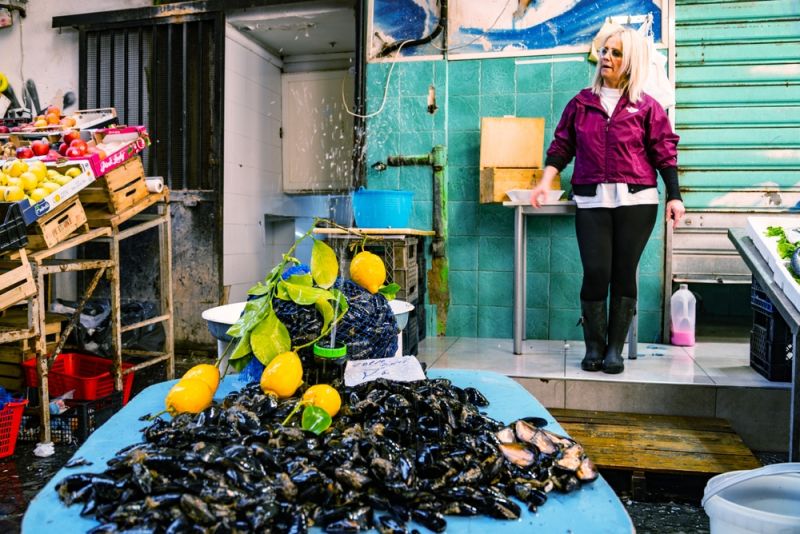
The measure directly targets what epidemiologists believe to be the most likely vector of the outbreak. Hepatitis A transmits via the faecal-oral route, through contaminated water or food, or through close contact with an infected person. It does not spread through handshakes, kisses or sharing a coffee cup. Shellfish, particularly filter-feeders like mussels and clams, concentrate viruses present in the water in which they grow, and consuming them raw creates a direct transmission pathway. In Naples, where raw shellfish, eaten straight from the shell at street-food stalls or in trattorias, is a deeply embedded culinary tradition, the risk is particularly acute.
Inspections of restaurants and seafood suppliers across Naples have been intensified since the outbreak was identified. The Istituto Zooprofilattico Sperimentale del Mezzogiorno in Portici, the specialist veterinary public health body for southern Italy, has been tasked with investigating the supply chain for shellfish and other seafood to identify potential contamination points. Controls across the entire mussel farming chain have been reinforced.
What is Hepatitis A — and Why Does it Matter?
Hepatitis A is a viral infection of the liver caused by the hepatitis A virus (HAV). It is classified as the most benign of the hepatitis viruses, unlike hepatitis B or C, it does not cause chronic liver disease and the overwhelming majority of patients recover fully without treatment. However, the infection is not trivial: symptoms can be severe, recovery can take weeks or months, and in rare cases, particularly among older patients or those with pre-existing liver conditions, it can cause acute liver failure, as seen in the one critical case at the Cotugno.
The most common symptoms are fever, malaise, nausea, abdominal pain, dark urine and jaundice (yellowing of the skin and eyes). Children may experience mild or asymptomatic infection but can still transmit the virus, a factor that complicates containment, since asymptomatic carriers spread the disease without knowing they are infected. The incubation period can extend to 50 days, meaning that cases now being diagnosed may reflect exposures that occurred weeks ago, and the full scale of the outbreak may not yet be apparent.
A safe and effective vaccine exists for hepatitis A, and is included in Italy’s national immunisation schedule for certain risk groups. Those who have not been vaccinated and believe they may have been exposed can receive post-exposure prophylaxis, either vaccination or immunoglobulin, within a defined window to reduce the risk of developing the disease.
“An increase that demands maximum attention in terms of food safety, epidemiological surveillance and public information.” — Campania Region
Is the Water Supply Involved?
One of the most pressing questions for investigators is whether contaminated water from the public network may be contributing to the outbreak, alongside or independently of shellfish consumption. Initial reassurances from health authorities have suggested that routine testing of the municipal water supply has not identified hepatitis A virus. The Campania region issued a statement noting that the epidemiological pattern is consistent with a localised cluster rather than a diffuse waterborne contamination of the main network.
However, experts have urged caution. The Istituto Zooprofilattico and the regional health system are conducting ongoing environmental sampling. Virologist Fabrizio Pregliasco, commenting in national media, urged the public not to lower their guard, noting that the pattern of spread across multiple municipalities and the island of Ischia is consistent with a food-source origin rather than person-to-person transmission alone. Authorities in Avellino province issued their own alert, expanding the geographic footprint of official concern beyond Naples and its immediate hinterland.
Public Health Guidance
Campania’s regional health authority has published a detailed set of recommendations for residents and visitors. The core message is straightforward: do not eat raw or undercooked shellfish. Beyond this specific prohibition, the guidance emphasises thorough handwashing with soap and water, particularly before eating and after using the toilet; the use of drinking water from certified sources only; and the avoidance of uncooked foods of uncertain origin.
Residents who develop symptoms consistent with hepatitis A, fever, nausea, abdominal pain, dark urine or jaundice, are advised to contact their GP or, in the case of severe symptoms, their nearest emergency department. They are asked specifically not to prepare food for others while symptomatic, and to maintain heightened personal hygiene. People who work in food service, health care or childcare settings and who develop symptoms should stay home immediately.
Vaccination is recommended for unprotected individuals in high-risk categories: those who did not complete the childhood immunisation schedule, people with chronic liver disease, travellers to areas of higher endemicity, and those with close contact with confirmed cases. A course of two doses provides long-lasting protection.
A City With Deep Roots in Raw Seafood Culture
The ban on raw shellfish lands hard in a city where eating raw mussels from a paper cone, or raw clams with lemon at a street stall by the port, is not a dietary choice but a cultural act. Neapolitan seafood culture is ancient, specific and intensely local, and the businesses that depend on it are now caught between a public health emergency and the economic realities of a tradition that draws both local custom and tourist spending.
The ordinance signed by Mayor Manfredi strikes a careful balance: it prohibits consumption on licensed premises but does not ban the sale of shellfish outright, allowing fishermen and fishmongers to continue trading while removing the immediate vector of raw consumption in restaurants and bars. Whether the measure will be sufficient to contain the outbreak depends on a factor that public health authorities cannot fully control: whether people comply voluntarily at home, away from the reach of any ordinance.
The Broader Context: Italy’s Hepatitis A Landscape
Italy experiences periodic hepatitis A outbreaks, many of them linked to shellfish from the coastal waters of Campania and other southern regions. The combination of dense coastal settlement, traditional raw seafood consumption and the vulnerability of mollusc cultivation to faecal contamination, whether from inadequately treated wastewater or from informal discharges, creates the conditions for recurrent episodes. The current outbreak is notable for its scale and speed, but it is not unprecedented in type.
National surveillance data collated by the Istituto Superiore di Sanità indicates that hepatitis A notifications across Italy have been running at an elevated level in early 2026, with Campania accounting for a disproportionate share. The ISS is monitoring the situation alongside regional authorities and has been in contact with the European Centre for Disease Prevention and Control (ECDC) given the potential for spread through travel and food supply chains.
For now, the immediate task is containment: identifying the contaminated batch or source, removing it from the supply chain, treating those already infected, and vaccinating those at risk. The scale of what has been established so far, cases 41 times above normal, a specialist hospital at capacity, emergency ordinances in effect, suggests a public health response that will need to be sustained for weeks, not days.
What to do if you are in Naples
— Do not eat raw or undercooked shellfish (mussels, clams, oysters, sea dates)
— Wash hands thoroughly with soap and water before eating and after using the toilet
— Drink water from certified sealed bottles if uncertain about tap water
— If you develop fever, nausea, jaundice or dark urine, contact a doctor immediately
— If you have not been vaccinated against hepatitis A, consider doing so — especially if visiting repeatedly
— Cooked seafood is safe to eat; the ban applies only to raw shellfish on licensed premises
ph: Enrico Della Pietra / Shutterstock.com
